
Running a small business in Sydney can be exciting, but it can also be challenging. Sydney has a competitive business environment, and customers have many options when choosing products and services. Therefore, having a strong online presence has become increasingly important for small businesses that want to attract attention and build lasting customer relationships.
One of the most accessible ways for businesses to build an online presence is through social media.
Platforms such as Instagram, Facebook, LinkedIn, and TikTok allow businesses to communicate directly with potential customers. Moreover, social media gives small businesses an opportunity to showcase their products, explain their services, share useful information, and build a recognizable brand.
However, successful social media marketing is not simply about posting every day. Instead, businesses need a clear strategy, relevant content, consistent branding, and an understanding of their target audience.
In this article, we will explore how social media can help small businesses in Sydney increase visibility, connect with local customers, generate leads, and support long-term growth.
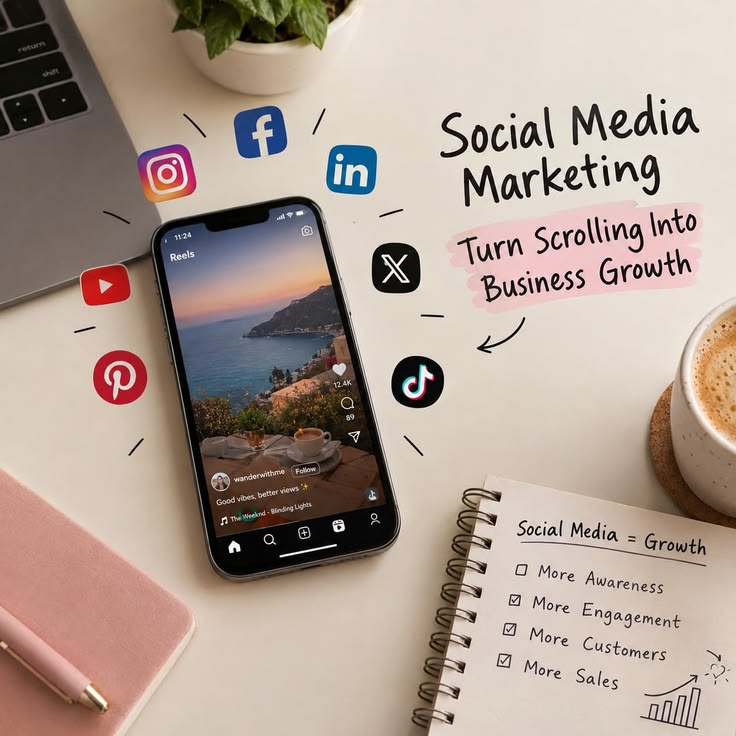
1. Increase Brand Awareness
First of all, social media can help small businesses introduce their brand to a larger audience.
A business may provide excellent products or services, but potential customers cannot choose that business if they do not know it exists. Therefore, building brand awareness is an important part of digital marketing.
For example, a Sydney café can share photographs of its food, behind-the-scenes videos, customer experiences, and new menu items. Similarly, a digital marketing agency can share SEO tips, website advice, social media ideas, and examples of previous work.
As people repeatedly see useful and relevant content, they may become more familiar with the brand. Consequently, social media can help businesses remain visible in the minds of potential customers.
2. Reach Local Customers in Sydney
For many small businesses, local customers are extremely important.
A restaurant, beauty salon, fitness studio, plumber, photographer, or local service provider may primarily serve customers within a particular area. Therefore, reaching the right local audience can be more valuable than simply reaching a large number of people.
Businesses can create location-focused content by mentioning relevant Sydney areas, participating in local conversations, sharing community-related information, and using appropriate location-based advertising.
For instance, a Sydney fitness studio could create content about local fitness activities, healthy lifestyle tips, and its services for people in the surrounding area.
Furthermore, businesses can combine social media with local SEO to create a stronger local online presence.
3. Build Trust With Potential Customers
Trust plays an important role when people decide whether to purchase from a business.
Before contacting a company, customers may want to know who is behind the business, what services it provides, and whether it has experience.
Social media can help answer these questions.
Businesses can share:
- Customer testimonials
- Completed projects
- Behind-the-scenes content
- Team introductions
- Product demonstrations
- Educational videos
- Frequently asked questions
Moreover, showing real people and real work can make a business feel more authentic.
Instead of only publishing promotional graphics, businesses can also share their story, process, and personality. As a result, potential customers may develop a better understanding of the brand.
4. Communicate Directly With Customers
Another major advantage of social media is two-way communication.
Unlike traditional advertising, social media allows customers to comment on posts, send messages, ask questions, and share feedback.
Therefore, businesses can use social media not only to promote their services but also to listen to their customers.
For example, a business can ask followers what topics they want to learn about or what products they would like to see in the future.
Furthermore, responding to comments and messages shows that the business values communication.
Professional and timely responses can help create a more positive customer experience.
5. Generate Website Traffic
A professional website is an important part of a business’s online presence. However, simply having a website does not guarantee that people will visit it.
Social media can help businesses direct interested users toward their websites.
For example, a Sydney business can share:
- Blog articles
- Service pages
- Product pages
- Portfolio projects
- Special offers
- Contact pages
Suppose a Sydney digital marketing agency publishes an article about SEO for local businesses. The agency can share a short summary of that article on Facebook, Instagram, or LinkedIn and encourage interested users to read the complete article.
Consequently, social media can become an additional source of website traffic.

6. Support Lead Generation
For most businesses, the ultimate goal of marketing is not simply gaining followers. Instead, businesses want meaningful enquiries and customers.
Social media can support lead generation by encouraging users to take specific actions.
For example, businesses can ask potential customers to:
- Visit their website
- Send a direct message
- Request a quote
- Book a consultation
- Call the business
- Sign up for an offer
However, the call to action should be clear.
Instead of ending every post with a generic message, businesses should tell users exactly what they can do next.
For example:
“Want to improve your online visibility? Send us a message to discuss your business goals.”
This provides a simple next step for interested users.
7. Showcase Products and Services
Social media can also work as a visual portfolio.
For example, a graphic designer can showcase branding projects, while a photographer can display recent photographs. Similarly, a restaurant can showcase its dishes, and a website development company can show completed websites.
Therefore, businesses can demonstrate their capabilities instead of simply describing them.
This is particularly useful for service-based businesses because potential customers can see examples of what the business actually delivers.
Moreover, before-and-after content, project highlights, and case studies can make services easier to understand.
8. Use Short-Form Video Content
Short-form videos have become an important part of social media marketing.
Instagram Reels, Facebook videos, and TikTok-style content can help businesses communicate information quickly.
For example, a Sydney business could create videos such as:
- “3 Social Media Mistakes Small Businesses Make”
- “3 Ways to Improve Your Website”
- “Behind the Scenes of Our Latest Project”
- “What Our Service Includes”
- “Common Questions Answered”
Furthermore, one video can often be adapted for multiple platforms.
Therefore, businesses do not always need to create completely different content for every social media channel.
9. Create Educational Content
Educational content can help businesses demonstrate their knowledge and provide value to their audience.
Instead of constantly promoting products or services, businesses can answer common customer questions.
For example, an SEO agency can explain what local SEO means. A website company can explain why mobile-friendly websites are important. A fitness business can share simple exercise tips.
Consequently, educational content can help position a business as a useful source of information.
In addition, helpful content may be saved or shared by users, which can increase its reach.
10. Use Social Media Advertising
Organic content is only one part of social media marketing.
Businesses can also use paid advertising to promote their products, services, offers, or websites.
For example, a Sydney business can create an advertisement designed to generate enquiries from people within its target market.
However, successful advertising requires more than simply spending money.
Businesses should consider:
- Target audience
- Location
- Ad creative
- Copywriting
- Offer
- Landing page
- Call to action
- Budget
- Performance tracking
Therefore, businesses should regularly monitor their campaigns and make adjustments based on performance.

11. Build a Strong Brand Identity
Social media can also help small businesses develop a recognizable brand.
Consistent colors, fonts, images, messaging, and tone can make a business easier to recognize.
For example, a business might use a consistent visual style across Instagram, Facebook, LinkedIn, and its website.
Furthermore, businesses should maintain a consistent tone of voice.
A professional business may use a more formal style, while a creative brand may use a more conversational approach.
As a result, consistency can create a stronger overall brand identity.
12. Connect Social Media With SEO
Social media and SEO are different marketing channels. Nevertheless, they can support each other.
SEO focuses on improving a website’s visibility in search engines, whereas social media focuses more on awareness, engagement, and communication.
For example, a Sydney business can publish an SEO-focused blog article and then share that article on its social media profiles.
Similarly, people who discover a business through social media may later search for the business on Google.
Therefore, businesses can use social media and SEO together as part of a broader digital marketing strategy.
13. Create a Consistent Content Strategy
Consistency is important for social media marketing.
However, consistency does not necessarily mean posting several times every day.
Instead, businesses should create a realistic schedule that they can maintain.
For example:
Monday: Educational post
Tuesday: Short video
Wednesday: Customer-focused content
Thursday: Industry tip
Friday: Service-focused post
This is only an example. Businesses can adjust the schedule according to their audience and resources.
Moreover, creating several pieces of content in advance can make social media management easier.
14. Avoid Common Social Media Mistakes
Small businesses should also avoid several common mistakes.
Posting Without a Strategy
Random posts can make it difficult to build a recognizable brand.
Only Posting Promotional Content
If every post asks people to buy something, followers may lose interest.
Ignoring Comments and Messages
Social media is about communication. Therefore, businesses should make an effort to respond to genuine questions and feedback.
Trying to Use Every Platform
Businesses do not necessarily need to be active everywhere. Instead, they should focus on platforms that match their target audience.
Expecting Immediate Results
Social media growth usually takes consistency and patience.
Therefore, businesses should focus on long-term improvement rather than expecting instant results.
15. Measure Social Media Performance
Finally, businesses should track their social media performance.
Useful metrics can include:
- Reach
- Engagement
- Comments
- Shares
- Saves
- Video views
- Profile visits
- Website clicks
- Leads
- Conversions
However, businesses should not focus only on follower numbers.
For example, a smaller account may generate more enquiries than a larger account if it has a highly relevant audience.
Consequently, businesses should connect social media performance with actual business goals.
Final Thoughts
Social media can provide small businesses in Sydney with many opportunities to increase brand awareness, reach local customers, build trust, showcase their services, generate website traffic, and support lead generation.
However, successful social media marketing requires more than simply creating an account and publishing occasional posts.
Businesses need a clear strategy, consistent content, strong branding, meaningful engagement, and regular performance analysis.
Furthermore, social media can work alongside other digital marketing strategies such as SEO, Google Ads, content marketing, and website development.
For example, SEO can help people discover a business through search engines, while social media can help build awareness and relationships. Similarly, Google Ads can reach people actively searching for specific services, while social media can introduce a brand to potential customers.
Therefore, a combined digital marketing strategy can help businesses create a stronger online presence.
For Sydney small businesses, the most important step is to understand their audience and create content that genuinely provides value.
Whether your business is a café, retail store, professional service, startup, creative company, or local service provider, social media can become an important part of your digital marketing journey.
With consistency, useful content, and a clear strategy, your social media presence can help your business connect with more people and create new opportunities for growth in 2026.
Frequently Asked Questions
How can social media help small businesses in Sydney?
Social media can help businesses increase brand awareness, reach local customers, communicate with their audience, showcase their services, generate website traffic, and support lead generation.
Which social media platform is best for small businesses?
There is no single platform that works best for every business. The right platform depends on the target audience, industry, content type, and business goals.
How often should a small business post?
There is no universal posting frequency. Businesses should choose a schedule they can maintain consistently while focusing on quality and relevance.
Can social media generate customers?
Yes. Social media can support customer acquisition by increasing awareness, driving website visits, promoting services, and generating enquiries.
Should small businesses use paid social media advertising?
Paid advertising can be useful when businesses have a clear goal, relevant targeting, strong creative content, and an effective landing page. Performance should be monitored and optimized regularly