
On-Page SEO: A Complete Guide to Optimising Your Website for Better Google Rankings
In today’s competitive digital environment, having a website is only the beginning of building an online presence. Although your website may look professional and contain useful information, potential customers still need to find it through search engines. Therefore, businesses need to optimise their websites so that both search engines and users can understand their content easily.
This is where on-page SEO becomes important.
On-page SEO refers to the optimisation of elements that exist directly on your website. These elements include page titles, headings, content, URLs, images, internal links, meta descriptions, and overall page structure. Consequently, effective on-page optimisation can help search engines understand what a page is about and can also create a better experience for visitors.
For businesses operating in competitive markets such as Sydney, on-page optimisation can become an important part of a broader SEO strategy. After all, even a great service may struggle to attract organic traffic if its website is difficult for search engines to understand.
In this guide, we will explore what on-page SEO is, why it matters, which elements should be optimised, and how businesses can create a strong on-page SEO strategy
.
What Is On-Page SEO?
On-page SEO is the process of improving individual webpages so they can perform better in search engines and provide a better experience for users.
Unlike off-page SEO, which focuses on activities outside your website, on-page SEO focuses primarily on what you can control directly.
For example, you can control the title of a webpage, its headings, written content, images, links, URLs, and many technical elements.
Therefore, on-page SEO gives businesses a strong foundation for improving their organic search presence.
However, on-page SEO is not simply about inserting keywords into a page. Instead, successful optimisation involves understanding search intent, creating useful content, organising information clearly, and making the page easy to navigate.
As a result, the best on-page SEO strategies focus on both search engines and real users.
Why Is On-Page SEO Important?
Search engines need to understand webpages before they can determine when those pages should appear in search results.
Therefore, clear page structure and relevant content can help search engines understand the subject of your website.
For example, suppose you operate an SEO agency in Sydney and have a page about your SEO services. If the page clearly explains your services, target audience, location, benefits, and approach, search engines have more context about what the page provides.
On the other hand, if the page contains vague headings, thin content, unclear navigation, and poorly optimised metadata, its relevance may be harder to understand.
Moreover, on-page SEO can improve the user experience.
When visitors arrive at a well-structured page, they can quickly find the information they need. Consequently, better usability can support engagement and conversions.
On-Page SEO vs Off-Page SEO
It is important to understand the difference between on-page and off-page SEO.
On-Page SEO
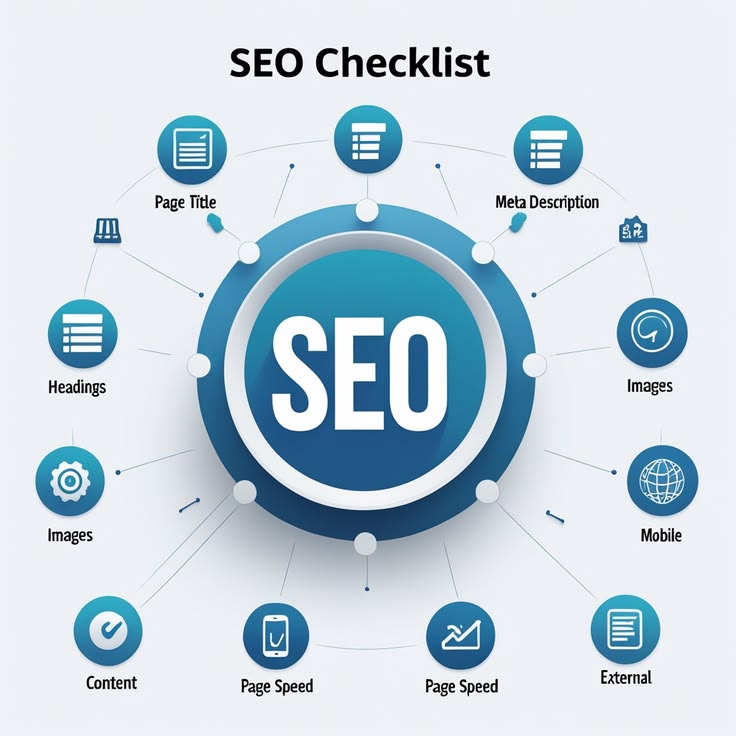
On-page SEO includes activities performed directly on your website, such as:
- Keyword optimisation
- Page titles
- Meta descriptions
- Headings
- Content optimisation
- URL optimisation
- Image optimisation
- Internal linking
- Page structure
- User experience improvements
Off-Page SEO
Off-page SEO focuses on signals and activities outside your website.
These may include:
- Backlinks
- Brand mentions
- Digital PR
- Online reputation
- Relevant citations
- External references
Therefore, on-page and off-page SEO should not be treated as competing strategies.
Instead, they work together.
A website with strong on-page optimisation can provide a solid foundation, while off-page strategies can help build authority and visibility.
Understanding Search Intent
Before optimising a webpage, it is important to understand what the user is actually searching for.
This is known as search intent.
Generally, search intent can be divided into several categories.
Informational Intent
The user wants to learn something.
For example:
“What is on-page SEO?”
Commercial Intent
The user is researching options before making a decision.
For example:
“Best SEO agency in Sydney.”
Transactional Intent
The user is ready to take action.
For example:
“Hire SEO company Sydney.”
Navigational Intent
The user is trying to find a particular website or business.
For example:
“Shravix Media SEO services.”
Therefore, your content should match the intent behind the keyword.
If someone searches for an informational topic, providing a sales-heavy page may not satisfy their needs. Similarly, if someone is ready to hire a service provider, a purely educational article may not provide enough information.
Consequently, understanding search intent is one of the most important parts of on-page SEO.
Keyword Research for On-Page SEO
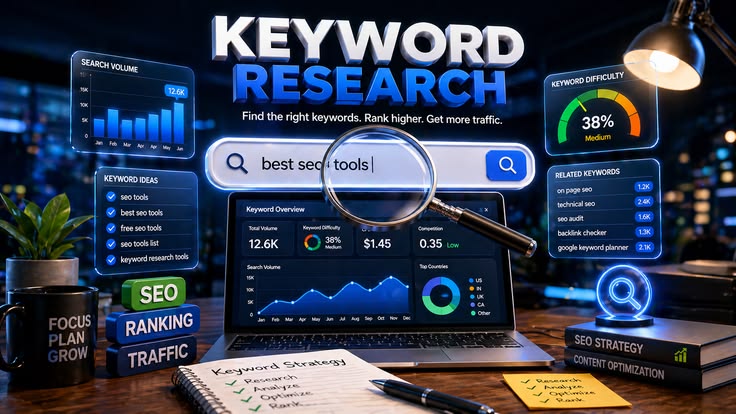
Keyword research helps identify the phrases people use when searching for information, products, or services.
However, keyword research should not focus only on search volume.
Instead, businesses should consider:
- Relevance
- Search intent
- Competition
- Business value
- Location
- Search behaviour
- Long-tail opportunities
For example, a Sydney SEO agency might target:
- On-page SEO Sydney
- SEO services Sydney
- SEO agency Sydney
- SEO website optimisation
- on-page SEO services Sydney
Furthermore, long-tail keywords can help target more specific searches.
For example:
“on-page SEO services for small businesses in Sydney”
is more specific than simply:
“SEO.”
Therefore, businesses should create keyword clusters rather than relying on one keyword repeatedly.
Choosing a Primary Keyword
Every important webpage should generally have a clear primary topic.
For example, if you are creating a page about on-page SEO services, your primary keyword could be:
On-page SEO services Sydney
Supporting keywords might include:
- On-page SEO Sydney
- website optimisation Sydney
- SEO content optimisation
- on-page SEO techniques
- SEO website optimisation
However, the keyword should naturally fit the content.
There is no need to repeat the exact phrase in every paragraph.
Instead, use variations and related terms where appropriate.
Writing an SEO-Friendly Title Tag
The title tag is one of the most important on-page SEO elements.
It helps search engines understand the page topic and can influence how your page appears in search results.
For example:
On-Page SEO Services Sydney | Shravix Media
is clearer than:
Our Services
The first title communicates the subject and location, while the second provides very little context.
Therefore, titles should be descriptive, relevant, and appealing.
Additionally, placing the primary keyword naturally within the title can help communicate relevance.
However, titles should not become keyword lists.
Writing Effective Meta Descriptions
A meta description provides a short summary of a webpage.
Although meta descriptions are not simply a direct ranking factor, they can influence how users perceive a search result and whether they decide to click.
Therefore, a good meta description should:
- Explain what the page offers
- Include the primary topic naturally
- Communicate a benefit
- Encourage relevant users to visit
For example:
“Discover practical on-page SEO strategies to improve website visibility, optimise content and attract more relevant organic traffic.”
Consequently, a clear meta description can make your search result more appealing.
Optimising H1 Headings
The H1 is the main heading of a webpage.
It should clearly communicate what the page is about.
For example:
On-Page SEO: A Complete Guide to Website Optimisation
is much clearer than:
Welcome to Our SEO Page
Therefore, your H1 should be specific and relevant.
Moreover, it should accurately represent the content that follows.
Using H2 and H3 Headings
Long webpages can become difficult to read without proper headings.
Therefore, H2 and H3 headings should divide the content into logical sections.
For example:
H2: What Is On-Page SEO?
H2: Why Is On-Page SEO Important?
H2: Important On-Page SEO Elements
H3: Title Tags
H3: Meta Descriptions
H3: Header Tags
This structure makes the page easier to scan.
Furthermore, headings can help search engines understand the organisation of your content.
Creating High-Quality SEO Content
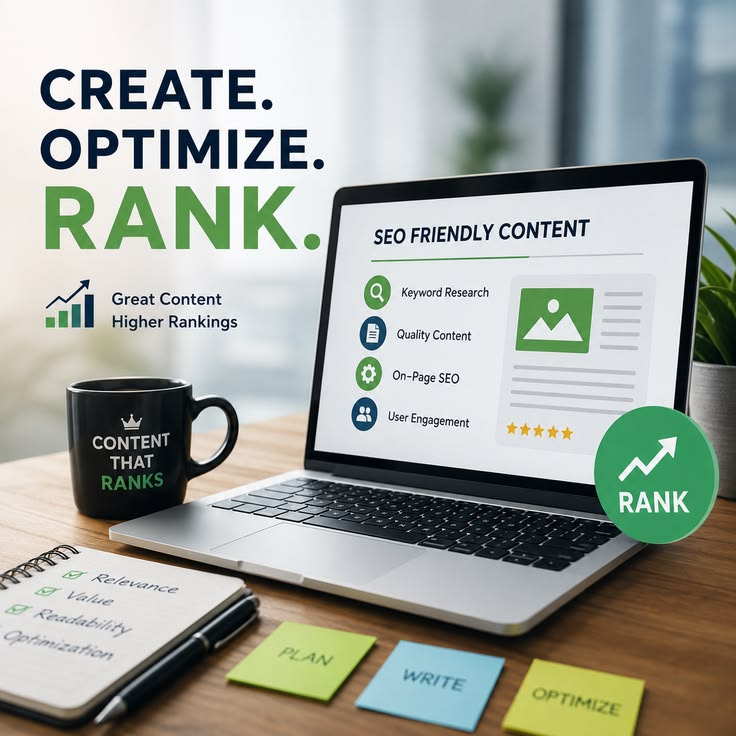
Content remains an important part of on-page SEO.
However, simply producing a large amount of content is not enough.
Instead, content should be:
- Useful
- Relevant
- Original
- Accurate
- Easy to understand
- Well organised
- Written for the intended audience
For example, if your target audience is Sydney business owners, your content should address their specific needs rather than providing generic information that could apply to any business.
Consequently, audience-focused content can be more useful and engaging.
Avoiding Keyword Stuffing
Keyword stuffing happens when a keyword is repeated unnaturally in an attempt to manipulate search rankings.
For example:
“SEO Sydney is the best SEO Sydney service for SEO Sydney businesses looking for SEO Sydney services.”
This is difficult to read and provides a poor user experience.
Instead, use natural language.
For example:
“Businesses in Sydney can improve their organic visibility by using a strategic SEO approach that combines content optimisation, technical improvements and local search strategies.”
Therefore, focus on topic relevance rather than keyword repetition.
Semantic Keywords and Related Terms
Search engines have become increasingly capable of understanding context.
Therefore, your content should naturally include related terminology.
For an article about on-page SEO, related terms might include:
- Search engine optimisation
- Website optimisation
- Organic traffic
- Search rankings
- Content optimisation
- Keywords
- Search intent
- Internal links
- Meta tags
- Website structure
As a result, your content can provide broader topical context.
Optimising URL Structure
URLs should be simple, descriptive, and easy to understand.
For example:
example.com/on-page-seo-services-sydney
is clearer than:
example.com/page?id=72838
Therefore, use short and meaningful URLs where possible.
Moreover, avoid unnecessarily long URLs containing multiple unrelated words.
A clean URL can also make it easier for users to understand what the page is about before clicking.
Internal Linking
Internal linking is another important part of on-page SEO.
Internal links connect different pages within your website.
For example, a blog post about on-page SEO can link to your main SEO services page.
Similarly, an article about local SEO can link to your Sydney SEO service page.
Therefore, internal links can help visitors discover related information.
Additionally, they can help search engines understand the relationship between different pages.
However, internal links should be relevant and useful rather than added randomly.
Choosing Anchor Text
Anchor text is the clickable text used for a link.
For example:
Sydney SEO services
is descriptive anchor text.
On the other hand:
Click here
does not provide much information.
Therefore, descriptive anchor text can improve usability and provide context.
However, avoid using the exact same keyword anchor repeatedly across every page.
Instead, use natural variations based on context.
Image SEO
Images can improve the visual quality of a webpage.
However, search engines also need context to understand images.
Therefore, image optimisation should include:
- Descriptive file names
- Relevant alt text
- Appropriate image dimensions
- Compression
- Suitable formats
- Lazy loading where appropriate
For example, instead of naming an image:
IMG12345.jpg
you could use:
on-page-seo-website-optimisation.jpg
Similarly, descriptive alt text can explain the image.
For example:
“On-page SEO website optimisation strategy”
Consequently, image optimisation can contribute to accessibility and overall page quality.
Why Alt Text Matters
Alt text describes an image for users who may not be able to see it.
It can also provide search engines with additional context.
However, alt text should describe the actual image.
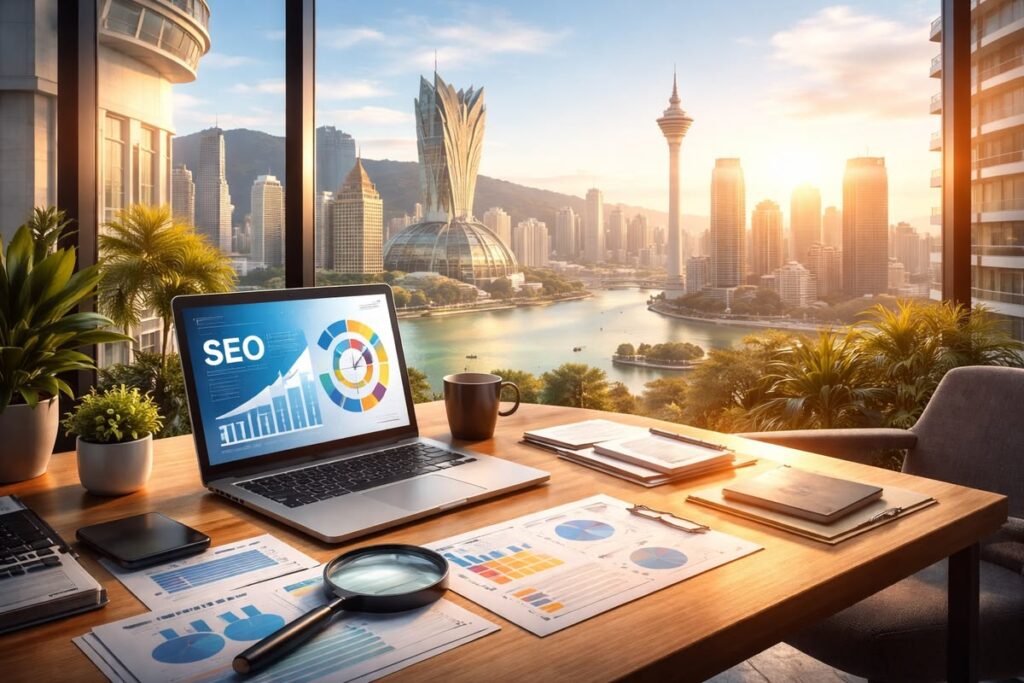
For example, if the image shows a laptop displaying an SEO dashboard, suitable alt text could be:
“SEO analytics dashboard showing website traffic growth.”
Therefore, avoid stuffing multiple keywords into image descriptions.
Optimising Image File Size
Large images can slow down webpages.
Therefore, businesses should compress images before uploading them.
At the same time, images should still maintain acceptable visual quality.
Using appropriately sized images can help reduce unnecessary page weight.
Consequently, image optimisation can support both performance and user experience.
Mobile-Friendly Website Optimisation
More people use smartphones to search for businesses and information.
Therefore, your website must work effectively on mobile devices.
A mobile-friendly website should:
- Adapt to different screen sizes
- Have readable text
- Use accessible buttons
- Load efficiently
- Provide easy navigation
- Avoid unnecessary pop-ups
Furthermore, forms should be easy to complete on smaller screens.
As a result, mobile optimisation can help provide a better experience for users.
Page Speed and On-Page SEO
Website speed can affect user experience.
If a page takes too long to load, visitors may become frustrated and leave.
Therefore, businesses should monitor page performance regularly.
Some common optimisation areas include:
- Image compression
- Browser caching
- Efficient code
- Reducing unnecessary scripts
- Optimising fonts
- Improving hosting performance
However, page speed should be considered alongside other aspects of website quality.
A fast page that provides poor information is still unlikely to satisfy users.
Core Web Vitals
Core Web Vitals are metrics designed to evaluate important aspects of user experience.
They focus on areas such as loading performance, responsiveness, and visual stability.
Therefore, businesses should pay attention to technical performance rather than focusing only on keywords.
A webpage should not shift unexpectedly while loading, should respond appropriately to user interactions, and should load important content efficiently.
Consequently, technical optimisation can complement content-focused on-page SEO.
Website Navigation
Navigation helps users move through your website.
Therefore, your navigation should be logical and easy to understand.
For example, a business website might have:
- Home
- About
- Services
- SEO
- Social Media Marketing
- Website Development
- Blog
- Contact
This structure helps users quickly locate important information.
Moreover, clear navigation can help search engines discover and understand website pages.
Content Readability
Even excellent information can fail if it is difficult to read.
Therefore, use:
- Short paragraphs
- Clear headings
- Bullet points
- Simple language
- Logical sections
- Relevant examples
Furthermore, transition words can help connect ideas smoothly.
Words such as:
however, therefore, moreover, furthermore, consequently, additionally, similarly, meanwhile, instead, as a result, for example, finally, in addition, on the other hand
can make content flow more naturally.
As a result, readers can follow the argument more easily.
Why Transition Words Matter
Transition words show relationships between ideas.
For example:
“SEO can improve visibility. However, rankings alone are not enough.”
The word “however” signals a contrast.
Similarly:
“Local SEO improves local visibility. Therefore, businesses can reach customers searching in their area.”
The word “therefore” shows a result.
Consequently, using transition words naturally can improve readability.
However, they should not be added mechanically.
Content Freshness
Some topics remain relevant for years, while others change frequently.
For example, SEO practices can evolve as search technology changes.
Therefore, businesses should review important content periodically.
Updating outdated statistics, examples, links, and recommendations can make content more useful.
Moreover, refreshed content can provide a better experience for returning visitors.
Creating Topic Clusters
A strong website should not rely on one page for every keyword.
Instead, businesses can create topic clusters.
For example, an SEO website could have a main SEO services page supported by articles about:
- On-page SEO
- Technical SEO
- Local SEO
- Keyword research
- SEO content
- Link building
- Google Business Profile
- SEO reporting
Each article can internally link to relevant service pages.
As a result, the website can demonstrate broader topical coverage.
On-Page SEO for Sydney Businesses
Sydney businesses can use on-page SEO to target location-specific searches.
For example, a business might optimise content around:
- SEO Sydney
- SEO services Sydney
- digital marketing Sydney
- website design Sydney
- local SEO Sydney
- on-page SEO Sydney
However, location keywords should be used naturally.
Instead of repeating “Sydney” in every sentence, provide genuinely useful information about serving the Sydney market.
Consequently, the content can remain natural while still targeting local search intent.
Optimising Service Pages
Service pages are especially important because they can target commercial search intent.
A strong service page should clearly explain:
- What the service is
- Who it is for
- What benefits it provides
- What the process involves
- Why customers should choose the business
- What action visitors should take next
Furthermore, relevant keywords should appear naturally in headings, content, metadata, URLs, and internal links.
Therefore, service pages should be treated as valuable landing pages rather than simple descriptions of services.
Optimising Blog Posts
Blog posts can target informational and long-tail searches.
For example, a Sydney SEO agency might publish:
“How to Improve Your Google Rankings in Sydney”
The article can answer the user’s question while naturally connecting the topic to the agency’s services.
Therefore, blogs can attract users earlier in the buying journey.
Additionally, useful blog content can support internal linking and topical authority.
Optimising Calls to Action
A call to action tells visitors what to do next.
For example:
- Contact us
- Request a consultation
- Get a quote
- Learn more
- Explore our SEO services
However, the CTA should match the user’s intent.
Someone reading an educational article may prefer “Learn more about our SEO services” rather than an aggressive sales message.
Consequently, contextual CTAs can create a smoother user journey.
On-Page SEO and Conversions
SEO should not focus exclusively on rankings.
Ultimately, businesses need visitors to take meaningful actions.
Therefore, on-page optimisation should also support conversions.
For example, a service page should make it easy for visitors to:
- Contact the business
- Call the company
- Submit an enquiry
- Request a quote
- Book a consultation
Moreover, trust signals such as testimonials, case studies, clear service information, and professional design can support decision-making.
Common On-Page SEO Mistakes
Several common mistakes can limit SEO performance.
Ignoring Search Intent
Targeting a keyword without understanding what users want can produce irrelevant content.
Using Duplicate Content
Multiple pages containing almost identical content can create a poor user experience.
Poor Heading Structure
Unclear headings make long content difficult to navigate.
Missing Internal Links
Important pages may become harder for users and search engines to discover.
Unoptimised Images
Large images can negatively affect page performance.
Keyword Stuffing
Excessive keyword repetition can make content unnatural.
Ignoring Mobile Users
A poor mobile experience can reduce engagement.A poor mobile experience can reduce engagement.
Weak Metadata
Generic titles and descriptions may fail to communicate page relevance.
Therefore, reviewing these areas regularly can help maintain a strong on-page foundation.Generic titles and descriptions may fail to communicate page relevance.
Therefore, reviewing these areas regularly can help maintain a strong on-page foundation.
How to Perform an On-Page SEO Audit
An on-page SEO audit involves reviewing important website elements.
Start by checking:
- Page titles
- Meta descriptions
- H1 headings
- H2 and H3 structure
- Keyword targeting
- Search intent
- Content quality
- Internal links
- URLs
- Image optimisation
- Mobile usability
- Page performance
- Calls to action
- Navigation
- Broken links
After identifying issues, prioritise them according to impact.
For example, fixing an important page’s indexing problem should generally come before changing a minor heading.
Consequently, prioritisation makes SEO work more efficient.
Measuring On-Page SEO Performance
After making changes, businesses should monitor performance.
Useful metrics may include:
- Organic impressions
- Organic clicks
- Click-through rate
- Keyword rankings
- Organic traffic
- Engagement
- Conversions
- Leads
- Revenue
However, metrics should always be connected to business objectives.
For example, if an SEO page generates traffic but no enquiries, the business may need to improve the content, CTA, offer, or user journey.
Therefore, SEO analysis should go beyond rankings.
How Often Should You Optimise Your Website?
SEO is not a one-time activity.
Search behaviour changes. Competitors publish new content. Websites evolve. Search engines improve their systems.
Therefore, businesses should regularly review important pages.
However, that does not mean changing everything every week.
Instead, focus on data.
If a page is performing well, avoid making unnecessary changes.
On the other hand, if a page has declining traffic or poor engagement, investigate why.
Consequently, data-driven optimisation is more effective than making random changes.
Professional On-Page SEO Services
Although businesses can perform some SEO tasks themselves, professional support can be useful for larger or more competitive websites.
Professional on-page SEO services Sydney can include:
- Keyword research
- Search intent analysis
- Content optimisation
- Metadata optimisation
- Heading optimisation
- URL optimisation
- Internal linking
- Image optimisation
- Technical recommendations
- Conversion optimisation
- SEO audits
- Performance monitoring
Furthermore, professional SEO specialists can create a structured strategy instead of treating each webpage separately.
For Sydney businesses competing in crowded markets, this strategic approach can be particularly valuable.
Why Businesses Should Invest in On-Page SEO
On-page SEO creates a foundation for organic search visibility.
Without a clear structure, relevant content, and technically sound webpages, other SEO efforts may become less effective.
Therefore, businesses should first make sure their website communicates its purpose clearly.
Then, they can build additional authority through content, links, local SEO, and other strategies.
Moreover, on-page SEO can improve the experience of existing visitors, not just search rankings.
Consequently, it can support both traffic generation and conversion opportunities.

Final Thoughts
On-page SEO is one of the most important foundations of a successful search engine optimisation strategy.
From keyword research and search intent to headings, metadata, content, URLs, images, internal links, mobile optimisation, and page performance, every element contributes to how effectively a webpage communicates with users and search engines.
However, successful SEO is not about manipulating search engines.
Instead, it is about creating webpages that are relevant, useful, accessible, technically sound, and easy to understand.
For businesses in Sydney, combining strong on-page optimisation with local SEO, technical SEO, content marketing, and authority-building strategies can create a more complete digital marketing approach.
Therefore, if your website is not generating the organic visibility you want, reviewing your on-page SEO could be an excellent place to start.
If you want professional help improving your website’s search visibility, explore SEO services in Sydney, Australia from Shravix Media. A strategic approach to on-page SEO can help your business create a stronger website foundation, reach more relevant users, and build sustainable organic growth.